
Growth Hormone Secretagogue Research Peptides
These compounds fall into two mechanistic families: GHRH analogs that act on the GHRH receptor, and ghrelin-receptor (GHS-R1a) agonists. Research interest lies in their differing selectivity profiles and effects on pulsatile secretion in animal models.
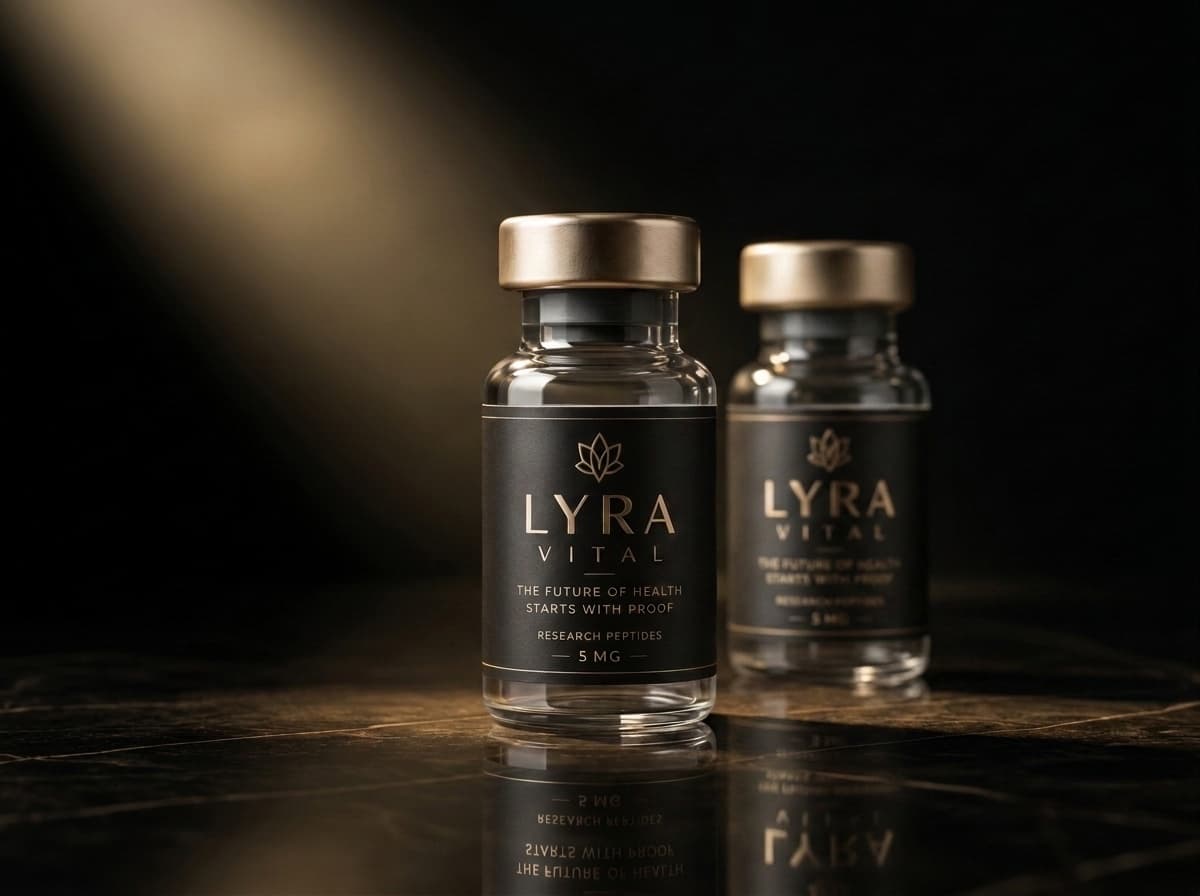
Ipamorelin
5–10mg · COA published
Highly selective pentapeptide ghrelin receptor agonist, notable for minimal cross-activation of other pituitary axes.
- CAS
- 170851-70-4
- MW
- 711.85
- Purity
- Per published certificate
CJC-1295 (no DAC)
5–10mg · COA published
Modified GRF (1-29) analog with four amino acid substitutions conferring resistance to enzymatic degradation.
- CAS
- 863288-34-0
- MW
- 3367.9
- Purity
- Per published certificate
Tesamorelin
10–15mg · COA published
Stabilized 44-amino-acid GHRH analog — the longest GHRH sequence in common research use.
- CAS
- 218949-48-5
- MW
- 5135.86
- Purity
- Per published certificate
IGF-1 LR3
1mg · COA published
83-amino-acid IGF-1 analog engineered for markedly reduced binding to IGF binding proteins.
- CAS
- 946870-92-4
- MW
- 9117.6
- Purity
- Per published certificate
Direct comparisons in this area
Shortlisting within a research area is where most of these decisions actually get made, so the pairs are compared on the same measured figures rather than on claims.
Ipamorelin vs CJC-1295 (no DAC)
Ghrelin receptor agonism versus GHRH receptor agonism — different receptors, frequently studied together for that reason.
CJC-1295 (no DAC) vs Tesamorelin
Truncated GHRH(1-29) against full-length GHRH(1-44). Sequence length is the whole distinction and it is routinely glossed over.
IGF-1 LR3 vs Tesamorelin
Direct IGF-1 receptor agonism versus upstream GHRH stimulation — acting at opposite ends of the same axis.
CJC-1295 (no DAC) vs IGF-1 LR3
IGF-1 LR3 vs Ipamorelin
Ipamorelin vs Tesamorelin
Other research areas